Showing posts with label Mongolian food. Show all posts

Saturday, May 21, 2011

Out to lunch, sort of

Ulaanbaatar, Mongolia
Saturday, May 21, 2011

Off on a crazy round of food shopping and found just enough time and energy to climb to the top of Nomin Department store for an early lunch in the employee's cafeteria. My favorite piroshki weren't on offer so I tried the fried egg sandwich (with coleslaw on raisin bread). With a glass of seabuckthorn juice. Sounds weird maybe, but actually it was incredibly tasty.

Saturday, November 13, 2010

Wrong color apron

Ulaanbaatar, Mongolia
Saturday, November 13, 2010

Shopping in UB, as I have mentioned before, is all about pattern recognition. Lately, my favorite flour has not been anywhere to be found. Then, last week, I found some and snapped up a couple of bags. Only today when I opened one to bake some bread did I realize why I had a nervous feeling when I bought the flour: it was the wrong stuff. The package DID have the little Russian girl on it, but her apron is the wrong color.

Looks like I ended up with either whole wheat or rye flour. Can't quite tell.

Saturday, October 9, 2010

UB farmers' market

Ulaanbaatar, Mongolia
Saturday, October 9, 2010

I don't think it will be around much longer this fall, but today I found a farmers' market here in UB. Mostly potatoes, carrots, beets and more of the same, but there were also lovely splashes of color.

Next year, I'll get here earlier in the season!

Pictured here: seabuckthorn, lingon berries(?), blue berries, rose hips, and black currants(?).

Thursday, July 29, 2010

Stall #14

Ulaanbaatar, Mongolia
Thursday, July 29, 2010

The parents are visiting here in UB, and they suggested that they'd like to try a bit of Mongolian food. I took them to one of our favorite food vendors at Naran Tuul (aka the Black Market): Stall #14.

The khuushuur (so-called "mutton pancakes") were quite tasty, the mantou buuz (mutton dumplings) okay, and the suutetsai (salty milk tea) still kind of hard to explain.

Here are the intrepid eaters at work...

Monday, June 28, 2010

Cheap food, excellent view

Ulaanbaatar, Monoglia
Monday, June 28, 2010

A couple of days ago while trying to find the book department in the State Department Store (Nomin), I accidentally ended up in what seems to be an employees' cafeteria. The piroshkis were excellent (and inexpensive) and the view from the 7th floor outstanding. Today I took Frank to try the place. It's a breathtaking view of the city looking east. And good food, too!

Piroshkis, Mongolian stir-fried rice, and a hot raisin/grape drink. To find it: take the internal staircase from the 5th floor

Thursday, June 24, 2010

Cool drink on a hot day

Ulaanbaatar, Mongolia
Thursday, June 24, 2010

Frank and I were at Naran Tuul (aka the Black Market) yesterday when we noticed these mini-tankers all over the place selling what appeared to be beer. Frank did a bit of searching on the internet and found that it was kvass and not beer. Kvass is a very mildly alcoholic beverage based on fermented rye bread. Wikipedia reports that it is commonly drunk throughout the former Soviet Union. Of course, Mongolia was not part of the USSR, but it was heavily influenced by the Soviets.

Today Frank went back for some more shopping at the Black Market and decided he'd give it a try. He reports that it is sweet, wonderfully refreshing, and that he could not detect any alcohol--sort of like lightly sweetened ice tea.

The perfect thing for a 99°F (37°C) day.

Sunday, March 21, 2010

The milk man cometh

Ulaanbaatar, Mongolia
Sunday, March 21, 2010

As mentioned previously in these pages, shopping for food and especially milk can be a challenge here. All the Russian milk has been gone for months and now the Polish milk is history, too. Starting early last week, fresh Mongolian milk seemed headed for scarcity as well. (Mongolian milk has a kind of extra-cow-ey flavor that takes some getting used to.)

Yesterday I searched four different stores for the fresh stuff but found only Mongolian long-life ultra-pasteurized milk. Finally, I gave in and stocked up on the long-life stuff, although somewhat reluctantly since it is rumored to be occasionally supplemented with Chinese powdered milk. Based on last year's milk scandal in China, that is one rumor worth considering.

This morning, to my delight, I looked out into the courtyard to see that the milk man had, at last, arrived.

Monday, February 15, 2010

Tsagaan Sar: Day Two

Ulaanbaatar, Mongolia
Monday, February 15, 2010

The second day of Tsagaan Sar is for visiting people who are less senior than those who rank for First Day visits--or for visiting older folks who are not immediate family members. This morning we were invited to visit another friend and his parents. And again, our training of what to say and do came in handy.

This was also my first time in a straw bale house--amazing to think that these homes can keep people warm in such extreme temperatures.

Sunday, February 14, 2010

Tsagaan Sar: Day One

Ulaanbaatar, Mongolia
Sunday, February 14, 2010

The first day of Tsagaan Sar (Mongolian New Year) is a day for greeting/paying respect to ones elders. Everyone (except the "elders") heads out in their dels or other fine clothes for a big day of visiting--and eating buuz, or dumplings. We were invited by my colleague to join him and his family on their first visit of the New Year--to pay respect to his father and mother.

Yesterday's Tsagaan Sar "lesson" came in quite handy (see previous post). Thankfully, we had a basic idea of what to do and when to do it.

Photo: My colleague's family's Tsagaan Sar table, complete with the aforementioned sheep back and tail.

Tsagaan Sar: Day Zero

Ulaanbaatar, Mongolia
Saturday, February 13, 2010

Today is Tsagaan Sar Eve--or the day before the Mongolian New Year holiday begins. Normally the visiting and feasting begins on New Year's Day (i.e. tomorrow), but an American colleague invited us to her house today for a "practice run" so that we could learn some of the New Year's greetings and traditions. Our colleague is married to a Mongolian and has lived in Mongolia for more than a decade.

Here are some of the things we learned:
  • whom to greet first
  • what to say as a greeting
  • that we should keep our hats on while greeting folks
  • that we should touch the bottom of plate of bread donuts (see photo) before taking a sweet
  • the higher the stack of bread donuts, the longer people have been married
  • there is always an odd number of layers to the bread stack--the first layer represents happiness, the second layer represents sorrow, the third layer represents happiness, etc.--thus there must always be an odd number of layers--so that one "ends" with happiness...
  • salty milk tea is served first
  • next up: sweetened rice
  • followed by: potato salad and pickles
  • don't be surprised if you see a cooked sheep back on the Tsagaan Sar table (not in this photo)
  • the length of a visit is just about 20 minutes--which is the time it takes to heat up a some buuz--or dumplings
  • you may refuse to drink your vodka, but then you must put put your finger in it and touch your forehead
  • Once the dumplings are eaten, the hosts will bring you your gift, and it's time to go--there are probably more guests on the way...

Thanks, S, for a lovely and instructive morning!

Sunday, February 7, 2010

The race is on

Ulaanbaatar, Mongolia
Sunday, February 7, 2010

Tsagaan Sar, the Mongolian New Year, is just a week away and preparations are underway everywhere. Everyone is frantically making mutton dumplings (or buuz) to serve to all the people who will visit them over the 3-day holiday. One friend said his family was making 1500 buuz, another said a 1000. The markets are buzzing, too, and the traffic ridiculously bad (of course, a bad snow storm is part of that equation as well).

In addition to serving food and drink to all ones guests, Mongolians are also expected to give gifts to everyone who comes to their house over the holiday. This puts a big financial strain on everyone, and for many, Tsagaan Sar seems to be a time of great social obligation.

Tuesday, January 26, 2010

Seabuckthorn postscript

Ulaanbaatar, Mongolia
Tuesday, January 26, 2009

All my earlier comments about seabuckthorn have generated a good deal of response from friends around the world. Several days ago I received this image (baby food!) from a friend in Finland. Which reminded me that I forgot to mention the treat that awaited us when we returned to Ulaanbaatar earlier this month from Thailand: an exploded bottle of seabuckthorn juice. Somehow a recently purchased bottle of the stuff got into the cupboard (instead of the fridge) before we left town for three weeks. We came home to streaks of the orange stuff running down the kitchen wall (it had escaped out of the back of the cupboard) and a great sticky orange pool in amongst the oils and vinegars.

I must say, the taste of seabuckthorn is rather an acquired one, but in the meantime, Frank and A have become big fans of the stuff. And it grows HERE in Mongolia--where not much else does.

Monday, January 4, 2010

"...served with warm Mongolian salad"

Bangkok, Thailand
Monday, January 4, 2010

Back in Bangkok and getting ready for the return trip to Ulaanbaatar.

Over breakfast this morning, I absentmindedly perused the lunch menu at our hotel. On the chef's speciality menu was the following item: "Peanut encrusted fish served with warm Mongolian salad". Pray, do tell. As we are just about to return to the Land of Few Fruits and Vegetables, I would dearly love to know what a Mongolian salad might consist of--especially one that does justice to a Thai peanut fish dish...

Sunday, November 22, 2009

Meat & Veges

Ulaanbaatar, Mongolia
Sunday, November 22, 2009

Slowly, I am getting used to buying meat at the markets in UB. In the aisles, young men push by burdened under the weight of frozen animal carcasses. Beef, pork, and mutton in great huge slabs greet one on the counter tops --and hacking them up turns out to be real exercise.

But buying vegetables here presents another challenge.

I know enough Mongolian to be able to ask this question: "Chinese or Mongolian?" At this point in the season, one can't reasonably expect much to still be growing here in Mongolia. (Although there may be some vegetable greenhouses operating here from what I understand.)

So, if you want any variety of vegetables (i.e. peppers, cauliflower, broccoli, etc), it means Chinese vegetables. If you're any kind of an "organic" shopper, you're not going to be happy if you spend too much time thinking about what the Chinese might put on their vegetable to make them look so nice.

So, you choose: either no fresh vegetables for the rest of the winter or vegetables from who-knows-where in China covered with who-knows-what kind of pesticides.

Sometimes, you've just got to close your eyes and buy something.

And don't even talk about ones "carbon footprint" around here: except for meat and milk products, almost all food products are imported to Mongolia.

Seabuckthorn unleashed

Ulaanbaatar, Mongolia
Sunday, November 22, 2009

I have commented on several occasions in recent weeks about seabuckthorn and the fact that the Mongolian government is promoting it as a preventative measure to H1N1. I know from the newspaper that the government is giving away seabuckthorn juice to "vulnerable" sectors of the population such as children and poor people. However, this morning when I walked into the meat section of Mercury Market, I did a double-take. Normally vendors everywhere in UB drink salty milk tea throughout their work days. But this morning as I looked around the market, every single meat seller was enjoying a nice big glass of seabuckthorn juice.

A little taste of heaven

Ulaanbaatar, Mongolia
Sunday, November 22, 2009

If there is one thing that has pulled us through in the food department in the past six weeks, it is the heavenly food at Ulaanbaatar's Taj Mahal restaurant. Again last night, Frank made the 30 minute walk (in very brisk temperatures) to get some take-out from this fantastic restaurant.

On a very difficult day six weeks ago when we were stranded in the hospital with A, a friend arrived with food from the Taj Mahal. Salvation!

We haven't been the same since.

Since then, we've eaten at the restaurant itself on two occasions, but what we've really come to love is enjoying their delicous food here at home.

It was all vegetarian dishes last night, which is the perfect antidote to the meat-rich Mongolian diet. Paneer jalfrezi. Baigan Pasanda. Daal Saagwala. Aloo gobi. At least three of the four dishes were lovely.

Oh, and the vegetable samosas with hot carrot chutney will brighten even the most difficult day.

Thursday, November 19, 2009

German meats

Ulaanbaatar, Mongolia
Thursday, November 19, 2009

One of the shops to which I make a regular stop each week is the German deli located near the Wrestling Palace. I would be curious to know how this place ended up here. A little bit of Europe located there at the end of a maze of small clothing shops.

In addition to a somewhat boring (but safe) selection of bolognes and salamis, they also sell tasty pre-spiced cutlets, sausages, and various cuts of meat. In fact, it's one of the few places that I've seen that sells meat as I am more used to seeing it--that is, cut up and ready to cook--instead of a great huge chuck of meat which I have to take home and hack away at.

And it has some interesting decor, too.

Three cheers for the German deli!

Sunday, November 15, 2009

Plate o' shrimp

Ulaanbaatar, Mongolia
Sunday, November 15, 2009

Two weeks ago I had never heard of seabuckthorn. Suddenly, it's everywhere.

I mention seabuckthorn at work, and my colleague brings in a bottle of the juice for me to try. (It smells kind of funny, but tastes quite nice.) Next, my friend in Finland informs me that she's just purchased some baby food in seabuckthorn flavor. Frank comes home from the grocery and reports having seen seabuckthorn wine. Then an e-mail from my Armenian friend: "Do you know that sea-buckthorn is quite common in ... sunny Armenia?! The well-made juice of it is fantastic!" Frank brings home the latest UB Post and there, on the front page, is a picture of school children receiving bottles of seabuckthorn juice to ward off Swine Flu. And finally, a trip to the market today revealed a new product for sale. What could it be? Bags of seabuckthorn berries.


It rather puts me in mind of the 1984 cult movie "Repo Man" when Miller says:

"A lot o' people don't realize what's really going on. They view life as a bunch o' unconnected incidents 'n things. They don't realize that there's this, like, lattice o' coincidence that lays on top o' everything. Give you an example, show you what I mean: suppose you're thinkin' about a plate o' shrimp. Suddenly someone'll say, like, "plate," or "shrimp," or "plate o' shrimp" out of the blue, no explanation. No point in lookin' for one, either. It's all part of a cosmic unconsciousness."

Throughout the rest of the movie, "plate o' shrimp specials" show up everywhere. As you may know, I don't see many movies, but Repo Man is one of my favorites.

See my 2 other posts on seabuckthorn:
King of Fruits?
Swine flu diet

Tuesday, November 10, 2009

Swine flu diet

Ulaanbaatar, Mongolia
Tuesday, November 10, 2009

When H1N1 hit Ulaanbaatar about a month ago things seemed to happen pretty quickly. First the face masks came out, and then Fall school vacations started early. Next, school vacations were extended indefinitely. On Friday, October 30th, the order went out to close all daycares and pre-schools. It was our turn to "feel the pain" as we were now without childcare.

A week ago on Nov. 3rd, a state of "high alert" went into effect closing all cultural and sporting events, marketplaces, clubs and bars (after 9pm), public gatherings, primary and secondary schools, and delaying all non-emergency surgeries at local hospitals. The Ministry of Education is making plans to start broadcasting school lessons on television.

This evening Frank arrived home with some heavenly Indian food and the latest edition of the UB Post.

The headline article about H1N1 brought this interesting point to my attention:

"Doctors recommend general public to eat more vitamin-rich foods, drink seabuckthorn juices and to consume more horsemeat, garlic and cruds (sic) to keep the winter flu at bay."

I don't know about garlic (although the proprietor of the Indian restaurant informed Frank that the price of garlic has risen 500% locally), but I'd certainly stay away from the "cruds".

Dried milk curds, however, ARE a tasty and important staple of the Mongolian diet.

Friday, November 6, 2009

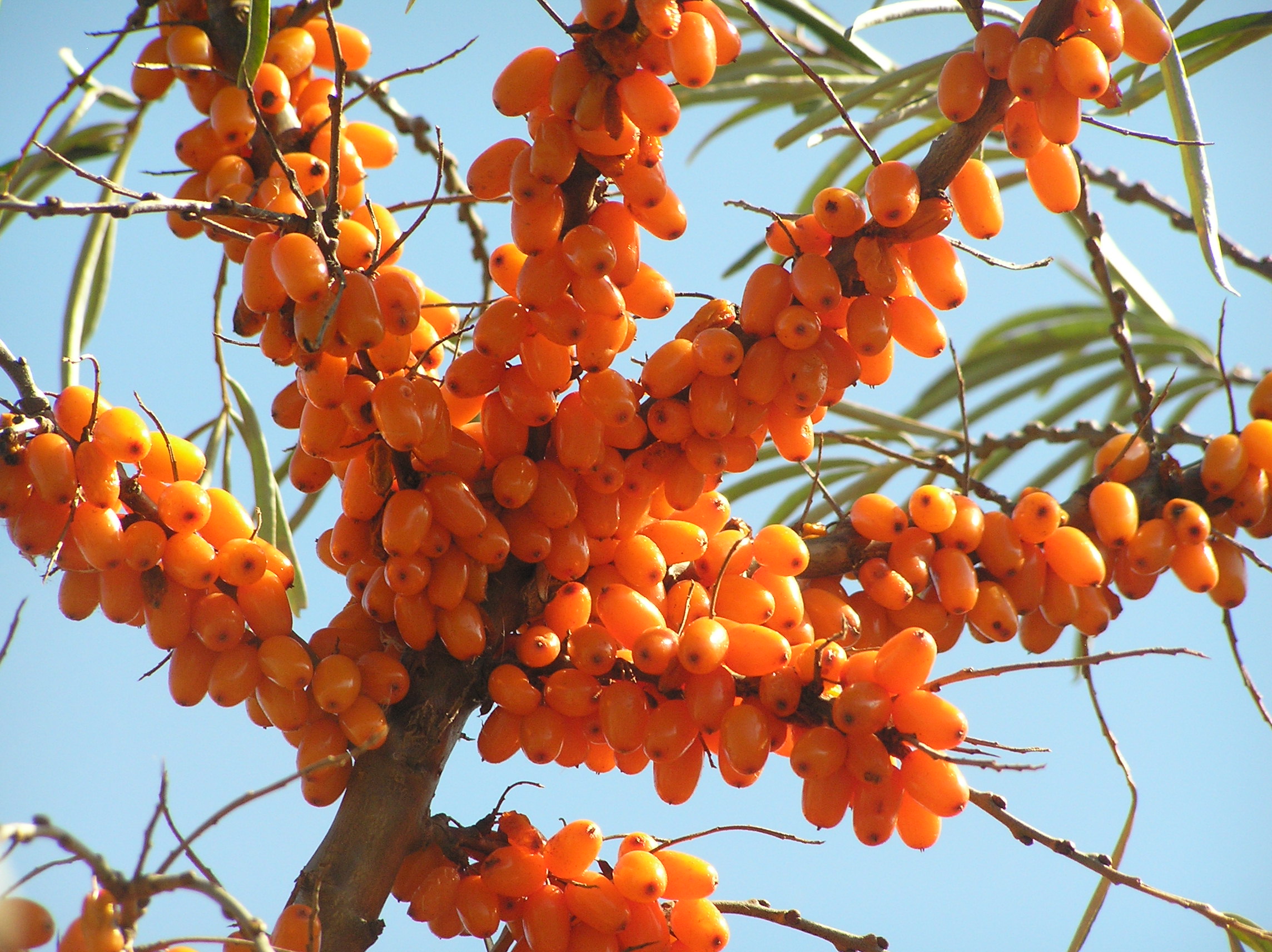
King of Fruits?

Ulaanbaatar, Mongolia
Thursday, November 5, 2009

An item in one of UB's English language newspapers caught my attention this week:

"The second consultation entitled "Organic Seabuckthorn - King of Fruits" urged the necessity to develop seabuckthorn industry as a priority among other natural fruits growing in Mongolia." (UB Post, Nov 3, 2009)

I was ready to learn more. Seabuckthorn? I'd never heard of it. Although we have seen something like blueberries for sale in the markets here, fruit is not your first thought when you think about Mongolia. Obviously, I still have much to learn about the flora and fauna of this country...

I share with you these four random facts from Wikipedia:

  1. Sea-buckthorn berries are multipurposed, edible and nutritious, though very acidic and astringent, unpleasant to eat raw, unless 'bletted' (frosted to reduce the astringency) and/or mixed as a juice with sweeter substances such as apple or grape juice.
  2. The plant is the regional flora of the Finnish region of Satakunta.
  3. When the berries are pressed, the resulting sea-buckthorn juice separates into three layers: on top is a thick, orange cream; in the middle, a layer containing sea-buckthorn's characteristic high content of saturated and polyunsaturated fats; and the bottom layer is sediment and juice.
  4. For its troops confronting extremely low temperatures, India's Defence Research Development Organization established a factory in Leh to manufacture a multi-vitamin herbal beverage based on sea-buckthorn juice.
To read still more: http://en.wikipedia.org/wiki/Sea-buckthorn

Photo credit: Wikipedia Commons